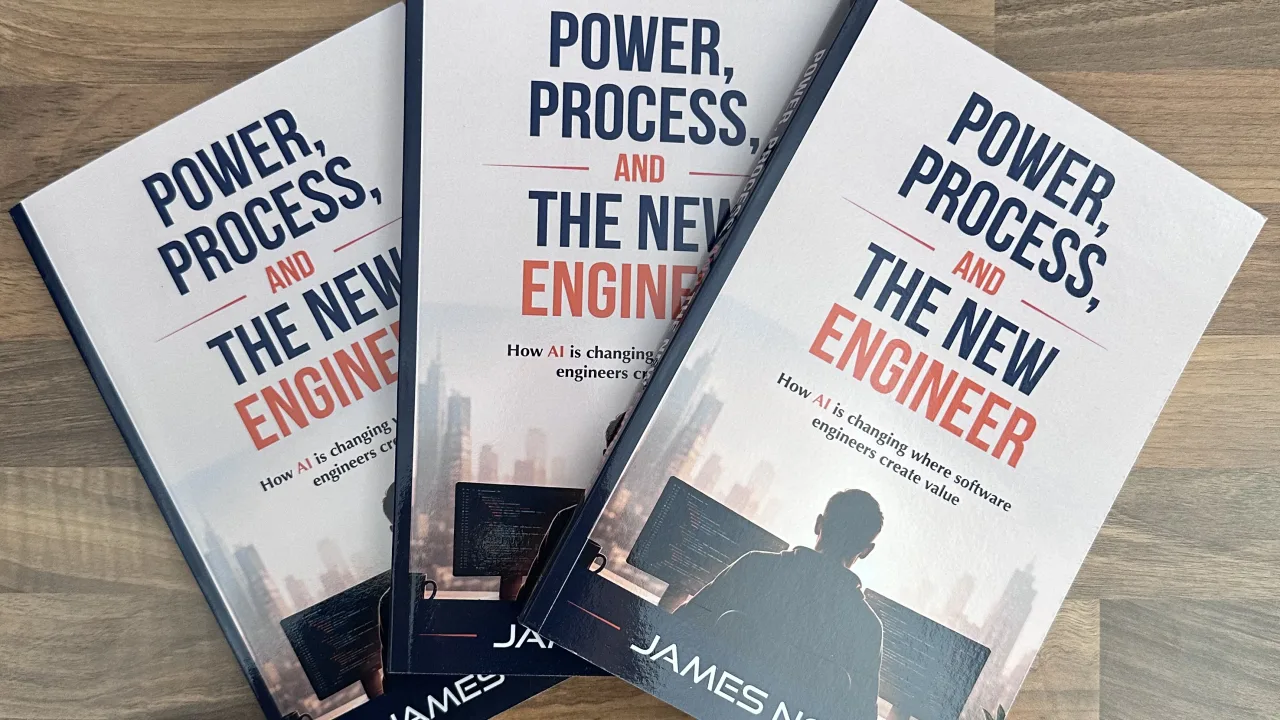
It’s called Power, Process, and the New Engineer: How AI is changing where software engineers create value.
AI is not replacing software engineers. It is changing where they create value.
As implementation becomes cheaper and faster, the valuable work moves towards judgement, architecture, product understanding, risk, governance, ethics, and human accountability. AI can help a team move quickly, but generating more code is not automatically the same thing as creating more value. Sometimes it just gets you to the wrong place faster.
Why I wrote it
A lot of the conversation about AI and software engineering seems to focus on output: how much code can be generated, how quickly a ticket can be completed, or how many hours a tool might save. Those things matter, but I don’t think they are the most interesting questions.
The more useful questions are:
Are we building the right thing?
Can we trust and maintain what has been produced?
Who is accountable when something goes wrong?
How should engineering teams and their processes adapt?
What does a great software engineer look like when writing code is no longer the expensive bit?
💡 My argument is that process becomes more important, not less. When software can be produced at greater speed, restraint, review, security, governance, and good judgement all become more valuable. Faster implementation without those things is just a more efficient way to create chaos.
Who the book is for
I wrote the book for Lead Engineers, Engineering Managers, Heads of Engineering, and CTOs who are trying to work out how their teams should adapt to AI without accelerating chaos in the process.
It explores:
Why cheaper code makes engineering judgement more valuable
How AI-assisted workflows might work inside real teams
Why security, governance, ethics, and review cannot be afterthoughts
How engineers become builders, architects, integrators, and stewards rather than simply producers of code
Why people need honesty, empathy, and discipline while all of this changes around them
This is not about resisting AI or pretending that software engineering will stay the same. It won’t. It is about making sure that, as our tools become more powerful, we become better builders rather than merely faster coders.
It’s out now
The paperback is available on Amazon now. I’ve also put the studies, reports, and supporting material referenced in the book at jnock.com.
Writing a book turns out to be a very effective way of discovering just how much work can hide behind the phrase “I’m writing a book”. But it’s finished, it’s real, and you can buy it.
Boom. I wrote a book. 📘
